Over nine months, I served as the lead producer for the Religious Landscape Study, the largest survey the Center had ever conducted. In my role, I strategized with digital collaborators on how to present a massive dataset in a digestible way and positioned myself as the expert on the team in where and how the variables would appear in the interactive database with almost 200 subpages. At the same time, I produced an almost-400-page report thinking through navigational elements and optimizing the SEO for the 26 webpages in the report. I proposed and managed a production schedule with deadlines for all of the products and coordinated communication with stakeholders from several teams to ensure we stayed on track for release. I additionally discovered and problem solved edge cases that arose during the interactive design and building process. Both the interactive database and report are consistently top pages on the Center’s website since their release, with the database receiving more than 1.23 million page visitors, and the report seeing more than 445,000 page visitors in the first 10 months. They were the first- and third-most visited Center pages published in 2025, respectively.
As a priority for the Pew-Knight Initiative in 2025, I was very involved in the strategy for this project from the beginning. I provided editorial guidance on the format and structure for the data essay helping to shape it into the resulting product – a central location for the News & Information team’s data on young adults. I additionally created and managed timelines for the different components of the project, including animations from an external vendor. This became the first data essay with all non-animated charts being made in the Center’s internal tool Chart Builder, and as the producer, I made sure all the pieces came together for it to be functional and polished on both desktop and mobile. I also experimented with collaborative editing in WordPress during the production process which allowed engineering, design and production to work in one post at the same time. Throughout the process, I actively participated with communications and audience collaborators in developing a communications plan to be shared with Knight Foundation. The essay received more than 10,000 page visitors in the first month and saw the fifth-highest average time on a page published in 2025.
For this project, I worked with the digital team to design an interactive tool that displays the News & Information team’s data on Americans’ awareness of, use of and trust in specific news sources. I collaborated closely with my engineering and design colleagues to plan how this product would look, including navigating sensitivities around how brands could be featured. I consulted our SEO consultant to confirm our pitch that having 30 child pages would be the right approach. When it came time to gather text for the feature, I created a guide for the N&I team to show what text was needed and where, which made the review process go very smoothly. I set expectations for timing clearly with all stakeholders early on. In the end, this tool received more than 33,000 page visitors in the first seven months.
For this Pew-Knight Initiative fact sheet, I was consulted on the best format to present updated data on news influencers on our website. Based on web traffic data from Parse.ly, search terms from Google that led to older content and the plan to update the data in the future, I advised the News & Information team to make this a fact sheet. This release was one of four fact sheets released within about a month from the N&I team. I created, managed and communicated a timeline in advance to my research, digital, editorial and communications colleagues for a quick succession of releases. I helped pitch formats for the charts in the sheet in partnership with our designer and built the charts myself using the Center’s internal tool Chart Builder, problem solving with the designer and engineering on any bugs that arose. The fact sheet received more than 6,000 page visitors in the first two months, while the other three saw a combination of more than 55,000 page visitors in the first three months.
This project focused on modernizing a 10-year-old interactive by updating it with new data and revamping the design. The challenge of this release was balancing methodological needs of showing margins of error with the desire to show rankings of states. The goal was to keep the page as simple as possible for users while still being accurate. I led discussions with the digital, research and methods team as we reached the consensus for the resulting interactive feature. In addition to coordinating a timeline for all involved colleagues, I put together a guide for all of the text that was needed to fill out the feature, which made the review process more efficient. The page received more than 86,000 page visitors in the first four months since the update.
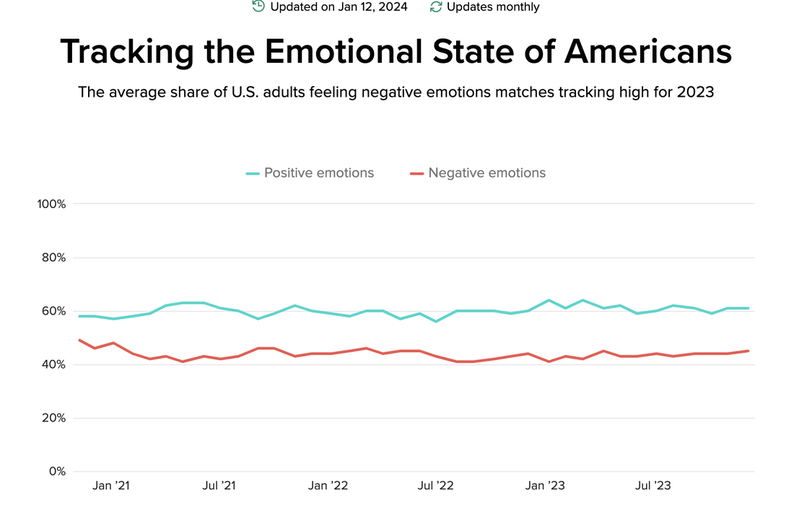
The Emotions Tracker was one of about 12 trend trackers that I managed while at Morning Consult. Every month, I'd analyze the survey data on the reported emotions among Americans, refresh the up to 21 charts in Everviz with the new data and schedule the page update in WordPress. I pitched adding more demographics to highlight the data we had. When MC Pro launched in May 2023, I reproduced the tracker in the new WordPress content management system along with almost a dozen other former and current trackers.
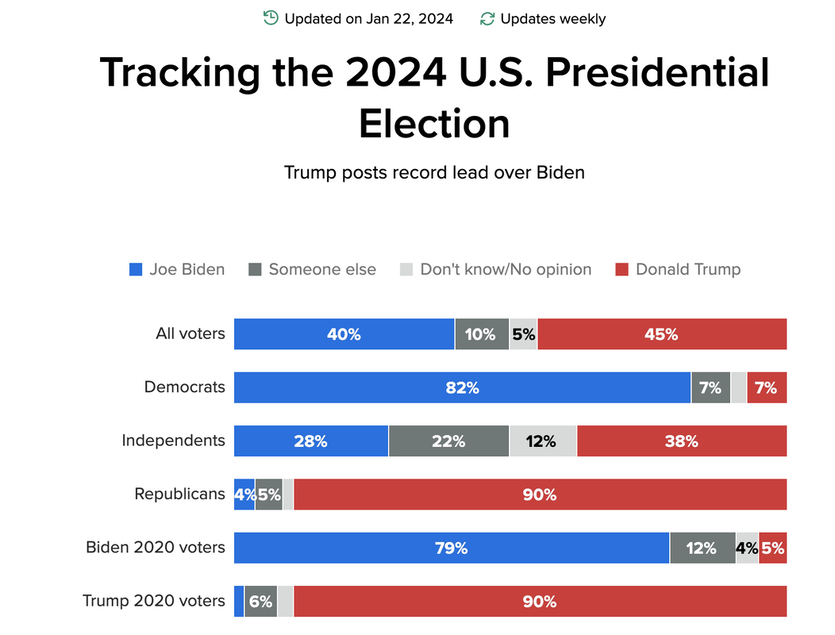
I built the 2024 U.S. Presidential Election Tracker in WordPress after receiving a request from the U.S. Politics team fora new tracker. I went beyond my usual responsibilities by setting up tabs for the charts in Everviz, including some special formatting to accommodate an ask to get different titles for individual charts in a tabbed format. I offered to update this tracker page in WordPress every week, along with a page specifically dedicated to the GOP primary, when we received new data.
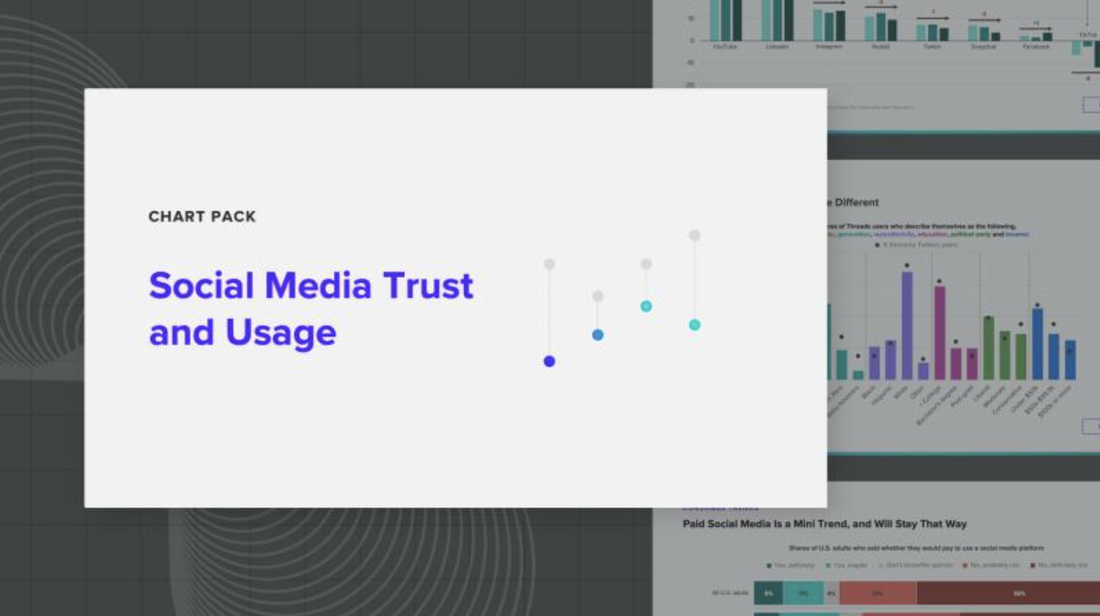
As a digital producer, I executed an idea from leaders to create a new PDF content type that compiled previously published charts into a presentation deck covering a timely topic. I pitched this chart pack as one of two highlighting public opinion on social media, with this one featuring more than a dozen charts that I found across 11 reports and articles. For six chart packs, I assembled and designed the deck in PowerPoint and wrote the introduction and key takeaways for the landing page.
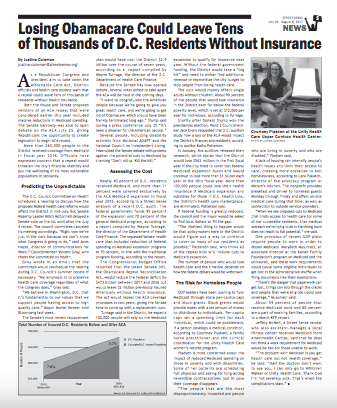
After researching how the potential of an Affordable Care Act repeal would affect D.C. and specifically the populations with lower incomes, I designed the page for my story in Adobe InDesign. I also did a photo shoot after one of my interviews with Courtney Pladsen and spent time researching data for a graphic and creating it in Adobe Illustrator.
|
© 2026 by Justine Coleman |
Header background courtesy of pixabay.com |